Web 2.0 Personalisation
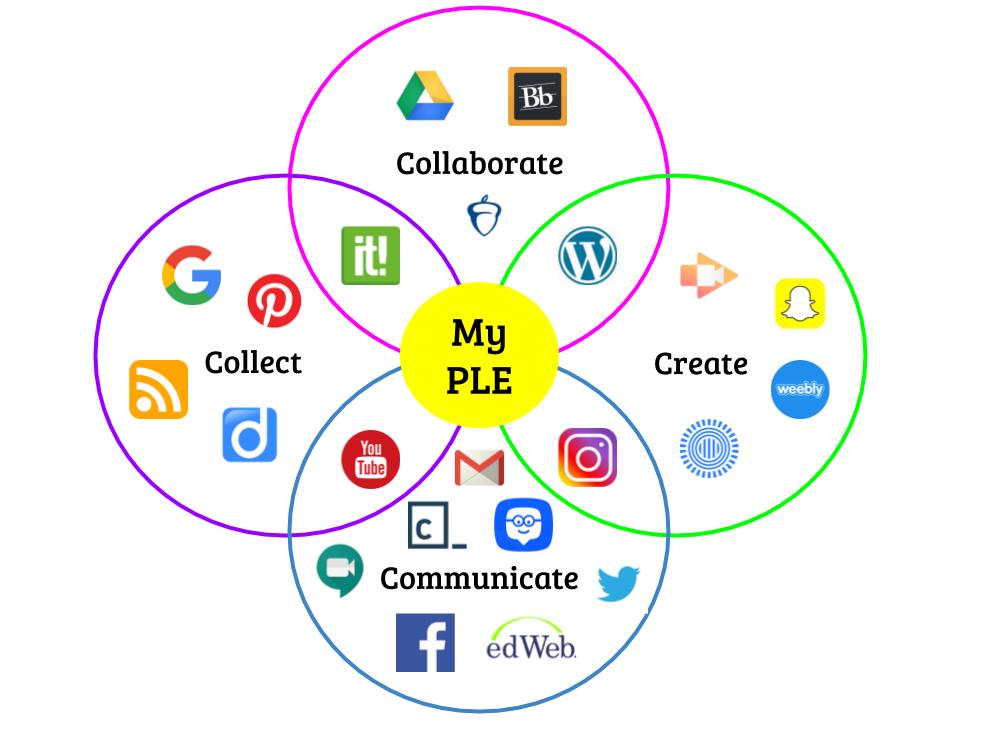
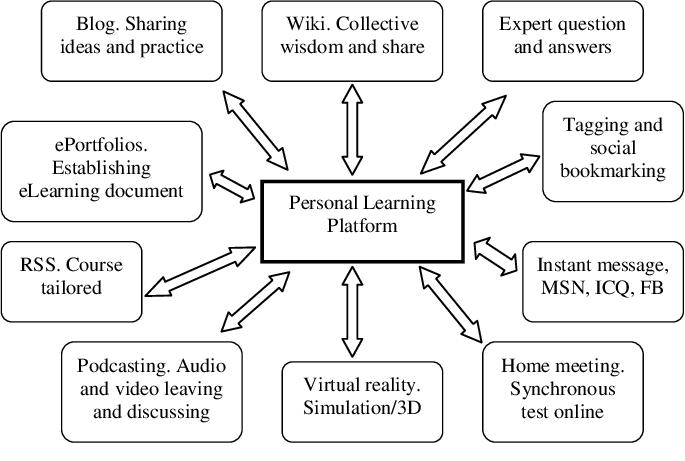
This process involves the use of Web 2.0 tools to create personalised activities and content tailored to learners’ characteristics. Web 2.0 applications facilitate information sharing, storage, organisation, and collaboration among users. These tools provide means for creating personalised learning materials as well as designing learning paths for distance learners. The application of Web 2.0 can also support the development of self-regulated learning, where students personalise their own learning process. This includes creating their own content and learning materials, as well as saving preferred resources and managing their learning. Various activities can be facilitated through tools that support personalisation of the learning process. Examples of Web 2.0 tools include e-portfolios, blogs, podcasts, wikis, social networking platforms, bookmarking tools, knowledge forums, and shared workspaces.
References
- Adorni, G., Battigelli, S., Brondo, D., Capuano, N., Coccoli, M., Miranda, S., ... & Vivanet, G. (2010). CADDIE and IWT: Two different ontology-based approaches to anytime, anywhere and anybody learning. Journal of e-Learning and Knowledge Society.
- Biel, P., Pérez, E., Rodrigo, C., & Serrano, A. (2016). Use of symbaloo edu for improving information management processes in work by modules. In Journal of Cases on Information Technology, 18(4), 33–35. https://doi.org/10.4018/JCIT.2016100102
- Gallego, M. J., & Gamiz, V. M. (2014). Personal learning environments (PLE) in the academic achievement of university students. Australian Educational Computing, 29(2). https://www.scopus.com/inward/record.uri?eid=2-s2.0-84927627055&partnerID=40&md5=4ee18de45adea3d9bae09f7b24b8fd4c
- Gustriansyah, R. (n.d.). An integrated model of collaborative learning in higher education.
- Juškevičiene, A., & Kurilovas, E. (2014). On recommending Web 2.0 tools to personalise learning. Informatics in Education, 13(1), 17–31. https://doi.org/10.15388/infedu.2014.02
- Panagiotopoulos, I., Kalou, A., Pierrakeas, C., & Kameas, A. (2012). An ontology-based model for student representation in intelligent tutoring systems for distance learning. AICT (Part 1), 381, 296–305. https://doi.org/10.1007/978-3-642-33409-2_31
- Rahimi, E., van den Berg, J., & Veen, W. (2015). Facilitating student-driven constructing of learning environments using Web 2.0 personal learning environments. Computers & Education, 81, 235–246.
- Ras, E., & Rech, J. (2009). Using Wikis to support the Net Generation in improving knowledge acquisition in capstone projects. Journal of Systems & Software, 82(4), 553–562.
- Torres Kompen, R., Edirisingha, P., Canaleta, X., Alsina, M., & Monguet, J. M. (2019). Personal learning environments based on Web 2.0 services in higher education. Telematics and Informatics, 38, 194–206. https://doi.org/10.1016/j.tele.2018.10.003